Safe shopping guarantee. You will receive your product or your money back. See details
Dietary supplement
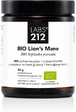
BIO Lion’s Mane / organic Lion’s Mane powder
Hericium erinaceus extract, 30% polysaccharides, 50 g for 50 days
Organic Lion’s Mane Mushroom Extract , 2 scoops – 1g daily. Just add to your coffee, tea, or smoothie and you’re good to go.
Organic certificate : product with a certificate of organic farming , certification body PL-EKO-02
Extract standardized to 30% polysaccharides
Fruiting body extract , without mycelium and growing medium
2 PLN DAILY PORTION
Pure composition: 100% lion’s mane extract , no additives, carriers or fillers
Microbiologically tested for the presence of heavy metals, ethylene oxide and PESTICIDES
Quantity: 50 g/ daily portions
Should be consumed before: 11/2028
Registered in GIS: BZ/SD/POW/PL1000D/011714/2026
 Filled and produced in Poland with BIO, GHP, GMP, HACCP, ISO 22000:2018 and ISO 9001:2015 certification
99,99 zł
497 in stock
Price per 100 g: PLN 199.98

 Free delivery within Poland from 250 zł
Previous lowest price was 99,99 zł.
BIO Lion’s Mane – organic Lion’s Mane powder, standardized to 30% polysaccharides.
PREMIERE


Dietary supplement
BIO Lion’s Mane / organic Lion’s Mane powder
Hericium erinaceus extract, 30% polysaccharides, 50 g for 50 days
Organic Lion’s Mane Mushroom Extract , 2 scoops – 1g daily. Just add to your coffee, tea, or smoothie and you’re good to go.
Organic certificate : product with a certificate of organic farming , certification body PL-EKO-02
Extract standardized to 30% polysaccharides
Fruiting body extract , without mycelium and growing medium
2 PLN DAILY PORTION
Pure composition: 100% lion’s mane extract , no additives, carriers or fillers
Microbiologically tested for the presence of heavy metals, ethylene oxide and PESTICIDES
Quantity: 50 g/ daily portions
Should be consumed before: 11/2028
Registered in GIS: BZ/SD/POW/PL1000D/011714/2026
- Filled and produced in Poland with BIO, GHP, GMP, HACCP, ISO 22000:2018 and ISO 9001:2015 certification
99,99 zł
497 in stock
Previous lowest price was 99,99 zł.
Price per 100 g: PLN 199.98
Free delivery from 250 zł
Shipping in 24h
Safe shopping guarantee
You will receive your product or your money back. Protection is provided by Trusted Shops.
See details
The BIO Lion’s Mane dietary supplement is a powdered preparation containing organic Lion’s Mane mushroom.
Lion’s Mane ( Hericium erinaceus ) is an edible mushroom with a distinctive shape resembling a cascade of white icicles. In English, it is called Lion’s Mane. It has been present in the cuisines of China and Japan for centuries.
Organic farming
The raw material comes from certified organic farms. This certification means that the mushrooms are grown without synthetic pesticides or fertilizers, and the entire production chain is subject to monitoring by a certifying body.
The extract is standardized to 30% polysaccharides . Each batch contains a consistent amount of polysaccharides. Additionally, we test its beta-glucan content, as the “polysaccharide” content itself may also include starch and other complex sugars.
The powder can be added to your morning coffee, tea, smoothie, or oatmeal. This is the easiest way to make this herbal remedy part of your daily routine.
Mushrooms readily accumulate heavy metals from their surroundings, so each batch is tested by an independent laboratory. Test results are available for download.
| INGREDIENT NAME | In a daily dose 2 scoops |
| Organic extract from the fruiting bodies of Lion’s Mane ( Hericium erinaceus ), DER 10:1 standardized to 30% polysaccharides | 1000 mg |
| including polysaccharides | 300 mg |
*NRV – Reference Intake Value
Ingredients: organic extract from the fruiting bodies of Lion’s Mane Mushroom (contains sulphites).
Gluten-free product.
Net weight: 50 g.
Recommended daily dose: 1000 mg (equivalent to 2 level scoops included in the package). Mix the lion’s mane with a hot or cold drink, such as coffee, tea, or a smoothie, or add it to a meal and consume immediately after preparation.
Do not exceed the recommended daily dose. Dietary supplements should not be used as a substitute for a varied diet. A balanced diet and a healthy lifestyle are important for the proper functioning of the body. Store out of the reach of small children, in a dry place, at room temperature, in a tightly closed container.
Contraindications: hypersensitivity to any of the ingredients, including allergy to fungi. Pregnant and breastfeeding women should consult a doctor before using the product.
Organoleptic properties: mild, slightly mushroomy, earthy, nutty flavor. It’s almost imperceptible when added to beverages.
Storage: BIO Lion’s Mane dietary supplement should be stored in a place protected from sunlight, at a temperature of 15-25 ° C, in the original packaging, out of reach of small children.
Production batch number/ Best before end – information can be found on the individual label (left side of the label).
Batch tests performed:
- microbiology, presence of: listeria, staphylococcus, escherichia coli and coliforms, salmonella , mold, yeast, total number of microorganisms,
- presence of: echimidine and heliosupine, erucifolin, europine, heliotrin, intermedina, jacobin, lasjocarpine, licopsamine and indicine, monocrotaline, echimidine N-oxide, erucifolin N-oxide, europine N-oxide, heliosupine N-oxide, heliothrin N-oxide, Intermedin N-oxide, Indicin N-oxide, Echinatin N-oxide, Rinderin N-oxide, Jacobin N-oxide, Lasiocarpine N-oxide, Lycopsamine N-oxide, Moncrotaline N-oxide, Retrorzyne N-oxide, Usaramine N-oxide, Senecionine N-oxide, N-oxide integerrimine, senecyvernine N-oxide, seneciphylline N-oxide, sparthioidine N-oxide, retrorzyne, usaramine, rinderine and echinatin, seneciphylline, sparthioidine, senecyvernine, integerrimine, senecionine, senkirkine, trichodesmin, atropine, scopolamine,
- presence of pyrrolizidine and tropane alkaloids,
- heavy metals (arsenic, cadmium, lead, mercury),
- pesticides,
- ethylene oxide and 2-chloroethanol,
- gluten content.
The research was carried out in an independent, accredited GBA Poland Laboratory – Accreditation Certificate No. AB 1095 and in Institute of Horticulture of the National Research Institute – Accreditation Certificate No. AB 757.





Link to research 2
Lion’s Mane Mushroom
Lion’s mane ( Hericium erinaceus ) is one of the most distinctive mushrooms in the world. In English-speaking countries, it is called lion’s mane , or “lion’s mane,” in Japan yamabushitake , and in China hóu tóu gū , or “monkey’s head.” All these names refer to its unusual appearance, which is difficult to confuse with any other mushroom.
The Lion’s Mane mushroom has no cap or stipe. Its fruiting body is a white or cream-colored, spherical mass covered with long, soft spines. The spines are several centimeters long and hang down in a cascade, resembling icicles, fur, or a mane. With age, the mushroom turns yellow and slightly brown.
In nature, it grows on the trunks of old deciduous trees, primarily beeches and oaks, most often in damaged areas, in tree hollows, or on dead wood. It is found in Europe, Asia, and North America, but is rare everywhere. In Poland, the Lion’s Mane is a protected species and cannot be collected from the wild. Therefore, the raw material for supplements comes exclusively from cultivated plants.
For centuries, the hericium has been prized in East Asian countries, both in traditional Chinese medicine and in cuisine. It was considered a delicacy worthy of imperial tables. Its Japanese name, yamabushitake , comes from the yamabushi , ascetic monks living in the mountains, whose robes were decorated with fringes resembling mushroom thorns.
Fresh lion’s mane mushrooms have a delicate, slightly sweet flavor and a soft, springy texture. When fried, they are often compared to seafood, crab, or lobster. Today, they are popular not only in Asia but also in European and American cuisines, and as an ingredient in dietary supplements, they are one of the most recognizable mushrooms in the world.
Lion's Mane - the power of edible mushrooms!
Lion’s Mane (Hericium erinaceus) is valued mainly for two groups of compounds.
Hericenones are aromatic compounds present in the fruiting body, i.e. the part of the mushroom that is visible and harvested.
Lion’s mane contains beta-glucans and other polysaccharides , primarily associated with effects on the immune system and gut microbiome. It also contains ergothioneine, an amino acid with antioxidant properties, as well as sterols and phenolic compounds.
Lion’s Mane has a delicate, nutty flavor. It can be added to coffee, cocktails, and other beverages, and its flavor is delicate and subtle.
Lion’s Mane grows wild in deciduous forests in the Northern Hemisphere: Asia, North America, and Europe. It is most often found on old beech and oak trees, where it forms characteristic white fruiting bodies with hanging “icicles.”
Its longest tradition is in East Asia. In China, it is called hóutóugū, or “monkey head mushroom.” It has been prized as a delicacy there for centuries, and was once served at the imperial court. In Japan, it is known as yamabushitake, named after the yamabushi, mountain hermit monks. The tuft of white thorns was meant to resemble the ornaments on their robes. In Asian cuisine, lion mushrooms are prepared similarly to seafood, as when fried, their delicate, fibrous texture resembles crab or lobster meat.
Lion’s Mane Mushroom occurs naturally in Poland, but is very rare. It is strictly protected, so it cannot be collected in the forest. Therefore, our product is made exclusively from Lion’s Mane Mushroom from organic, controlled cultivation.
Standardization means that each batch of extract contains a guaranteed, consistent amount of selected compounds, in this case 30% polysaccharides. Standardization is the most important marker of an extract. Thanks to standardization, the product’s composition remains constant and is guaranteed between batches, regardless of season or harvest.

Compose your treatment with LABS212®


Discover other LABS212® products
-

Dietary supplement
Magnesium L-Threonate Magtein®
Support for memory and concentration, increased energy levels. The only patented form of magnesium on the market that effectively crosses the blood-brain barrierMore -

Dietary supplement
Bromelain
Support for digestion and relief of digestive discomfort. High enzymatic activity: 1200 GDUMore -

Dietary supplement
FeroMax®
Support in the proper production of red blood cells and hemoglobin. Support in anemia, iron and ferritin deficiency.More -

Dietary supplement
Zinc Complex Capsule
A blend of 3 organic forms of zinc: picolinate, citrate, gluconate. Helps maintain normal immune system function.More