Safe shopping guarantee. You will receive your product or your money back. See details
Dietary supplement
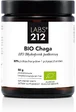
BIO Chaga / organic powder
Inonotus obliquus extract, 30% polysaccharides, 50 g per 50 days
Organic Chaga mushroom extract , 2 scoops – 1 g daily. Just add to your coffee, tea, or smoothie and you’re good to go.
Organic certificate : product with a certificate of organic farming , certification body PL-EKO-02
Extract standardized to 30% polysaccharides
Fruiting body extract , without mycelium and growing medium
2 PLN DAILY PORTION
Pure composition: 100% chaga extract, no additives, carriers or fillers
Microbiologically tested for the presence of heavy metals, ethylene oxide and PESTICIDES
Quantity: 50 g/ daily portions
Should be consumed before: 11/2028
Registered in GIS: BZ/SD/POW/PL1000D/015313/2026
Production certificates: GHP, GMP, HACCP, ISO 22000:2018, ISO 9001:2015
 Manufactured in Poland
99,99 zł
498 in stock
Price per 100 g: PLN 199.98

 Free delivery within Poland from 250 zł
Previous lowest price was 99,99 zł.
Organic Chaga mushroom extract, DER 10:1, standardized to 30% polysaccharides.
PREMIERE


Dietary supplement
BIO Chaga / organic powder
Inonotus obliquus extract, 30% polysaccharides, 50 g per 50 days
Organic Chaga mushroom extract , 2 scoops – 1 g daily. Just add to your coffee, tea, or smoothie and you’re good to go.
Organic certificate : product with a certificate of organic farming , certification body PL-EKO-02
Extract standardized to 30% polysaccharides
Fruiting body extract , without mycelium and growing medium
2 PLN DAILY PORTION
Pure composition: 100% chaga extract, no additives, carriers or fillers
Microbiologically tested for the presence of heavy metals, ethylene oxide and PESTICIDES
Quantity: 50 g/ daily portions
Should be consumed before: 11/2028
Registered in GIS: BZ/SD/POW/PL1000D/015313/2026
Production certificates: GHP, GMP, HACCP, ISO 22000:2018, ISO 9001:2015
- Manufactured in Poland
99,99 zł
498 in stock
Previous lowest price was 99,99 zł.
Price per 100 g: PLN 199.98
Free delivery from 250 zł
Shipping in 24h
Safe shopping guarantee
You will receive your product or your money back. Protection is provided by Trusted Shops.
See details
The BIO Chaga dietary supplement is a powdered preparation containing organic lion’s mane mushroom.
Chaga (Inonotus obliquus) is a mushroom that grows primarily on birch tree trunks in cool forests of the Northern Hemisphere: Siberia, Scandinavia, the Baltic countries, northern Canada, and Alaska. It is also found in Poland. However, the most prized raw materials come from regions with harsh, cold climates.
On the tree trunk, chaga mushrooms look different from typical mushrooms. They form a hard, irregular growth, black and cracked on the outside, resembling charred wood. Melanin gives them their dark color. The interior has a warm, rusty-gold hue and a corky texture. This growth is called a sclerotium, a compact mass of mycelium that develops slowly on a living tree, sometimes over a period of several years. During this time, the mushroom absorbs nutrients from the birch tree, including compounds found in its bark.
Chaga has been present in the folk traditions of Siberia and Northern Europe for centuries. In areas where tea was scarce, it was prepared into a dark, slightly earthy infusion that was drunk daily. Today, it is consumed worldwide, most often in the form of extracts.
Chaga has a rich and distinctive composition. It contains polysaccharides, including beta-glucans, as well as triterpenes such as inotodiol and lanosterol. Birch bark contains betulin and betulinic acid, rarely found in other mushrooms. Chaga also contains numerous polyphenols, melanin, and sterols. The properties of these compounds are still the subject of scientific research.
Organic farming
The raw material comes from certified organic farms. This certification means that the mushrooms are grown without synthetic pesticides or fertilizers, and the entire production chain is subject to monitoring by a certifying body.
The extract is standardized to 30% polysaccharides . Each batch contains a consistent amount of polysaccharides. Additionally, we test its beta-glucan content, as the “polysaccharide” content itself may also include starch and other complex sugars.
The powder can be added to your morning coffee, tea, smoothie, or oatmeal. This is the easiest way to make this herbal remedy part of your daily routine.
| INGREDIENT NAME | In a daily dose 2 scoops |
| Organic extract from the fruiting bodies of the chaga mushroom ( Inonotus obliquus ), DER 10:1, standardized to 30% polysaccharides | 1000 mg |
| including polysaccharides | 300 mg |
*NRV – Reference Intake Value for Adults
Ingredients: organic extract from the fruiting bodies of Chaga mushroom (contains sulphites).
Gluten-free product.
Net weight: 50 g.
Portion recommended for consumption during the day : 1000 mg (equivalent to 2 scoops included in the package).
Recommended use : Dissolve the product in a glass of water or other liquid. It can be added to cocktails, desserts, liquids, and semi-liquids at room temperature.
Do not exceed the recommended daily dose. To maintain good health, a varied diet and a healthy lifestyle are recommended. Dietary supplements should not be used as a substitute for a varied diet. This product is recommended for adults.
Warning: Pregnant and breastfeeding women should consult a doctor before using the product.
Organoleptic properties: light powder with a neutral taste.
Storage: the BIO Chaga dietary supplement should be stored in a place protected from sunlight, at a temperature of 15-25 ° C, in the original packaging, out of the reach of small children.
Production batch number/ Best before end – information can be found on the individual label (left side of the label).
Batch tests performed:
- microbiology, presence of: listeria, staphylococcus, escherichia coli and coliforms, salmonella , mold, yeast, total number of microorganisms,
- presence of: echimidine and heliosupine, erucifolin, europine, heliotrin, intermedina, jacobin, lasjocarpine, licopsamine and indicine, monocrotaline, echimidine N-oxide, erucifolin N-oxide, europine N-oxide, heliosupine N-oxide, heliothrin N-oxide, Intermedin N-oxide, Indicin N-oxide, Echinatin N-oxide, Rinderin N-oxide, Jacobin N-oxide, Lasiocarpine N-oxide, Lycopsamine N-oxide, Moncrotaline N-oxide, Retrorzyne N-oxide, Usaramine N-oxide, Senecionine N-oxide, N-oxide integerrimine, senecyvernine N-oxide, seneciphylline N-oxide, sparthioidine N-oxide, retrorzyne, usaramine, rinderine and echinatin, seneciphylline, sparthioidine, senecyvernine, integerrimine, senecionine, senkirkine, trichodesmin, atropine, scopolamine,
- presence of pyrrolizidine and tropane alkaloids,
- heavy metals (arsenic, cadmium, lead, mercury),
- pesticides,
- ethylene oxide and 2-chloroethanol,
- gluten content.
The research was carried out in an independent, accredited GBA Poland Laboratory – Accreditation Certificate No. AB 1095 and in Institute of Horticulture of the National Research Institute – Accreditation Certificate No. AB 757.




Subcortical flash pore
Chaga , also known as the chaga mushroom ( Inonotus obliquus ), is a mushroom that has held a special place in the traditions of the peoples of the North for centuries. It grows primarily on living birch trees in the cool forests of the boreal zone: Siberia, Scandinavia, Finland, the Baltic countries, northern Canada, and Alaska. It can also be found in Poland, although the most prized raw material comes from regions with long, frosty winters.
Unusual appearance and slow growth
Chaga doesn’t resemble a typical mushroom with a cap and stem. It forms a hard, irregular growth on a birch tree trunk, resembling a piece of charred wood from a distance. Its outer layer is black, deeply cracked, and rough. Its intensely dark color comes from melanin, a natural pigment that protects the mushroom from harsh environmental conditions. Once broken open, the interior reveals a completely different color: a warm, rusty gold, with a corky, fibrous structure.
The growth harvested as raw material is called sclerotia, a dense, hard mass of mycelium. It develops very slowly, taking up to a dozen years to reach its mature size. Throughout this time, the chaga remains closely connected to the tree and draws its nutrients from it, including compounds found in birch bark. This unique relationship directly influences its composition.
Chaga in tradition
The history of chaga use dates back several hundred years. People living in Siberia and the northern reaches of Europe prepared infusions from it and incorporated it into their daily lives. Tea was a scarce or expensive commodity, and chaga often replaced it. The dark, aromatic infusion was brewed daily in many homes. Chaga played a similar role in Finland during periods of coffee shortage, when it was used as a substitute.
Over time, chaga gained popularity far beyond the North. Today, it is one of the most recognizable mushrooms in the world of natural supplements, alongside species such as reishi, lion’s mane, and cordyceps.
Prebiotic complex - discover its effects!
The composition of chaga is complex and distinguishes it from other mushrooms.
Polysaccharides and beta-glucans. Like many mushrooms, chaga contains polysaccharides, including beta-glucans, complex sugars that make up the mushroom’s cell walls. This is one of the most studied groups of compounds found in mushrooms.
Betulin and betulinic acid. These are compounds characteristic of birch bark. Chaga absorbs them from the tree on which it grows, which distinguishes it from most other mushrooms. This is why it’s so important that the raw material comes from a natural birch tree.
Triterpenes. Chaga contains, among others, inotodiol and lanosterol, compounds from the triterpene group that are of interest to scientists.
Polyphenols and melanin. Chaga is a rich source of polyphenols and melanin, which is responsible for its characteristic dark color.
Sterols and minerals. Chaga also contains sterols, including ergosterol, and minerals derived from the tree and the environment.
Many of chaga’s valuable components are encased in very tough cell walls made of chitin, the same substance that makes up insect shells. The human body cannot digest chitin, so powdered mushroom powder alone doesn’t fully capture its nutritional value.
The most popular method is hot water extraction, which effectively releases polysaccharides, including beta-glucans. Some components, such as betulin and triterpenes, are poorly soluble in water, so a double extraction is also used: water and alcohol. This allows for a more complete profile of the compounds present in the mushroom.
Chaga infusion has a dark color and a mild, earthy flavor with a slightly bitter, woody note and a subtle vanilla aftertaste. It contains no caffeine, so it was traditionally used as a substitute for tea and coffee, for example in Finland during times of shortages.
Chaga is harvested by hand from the trunks of living birch trees, most often in the fall and winter. The growth is carefully cut from the tree, then cleaned, crushed, and dried. The mushroom grows very slowly, and a mature growth can take up to a dozen years to develop. Therefore, responsible harvesters leave some of the chaga on the tree to continue growing and avoid harvesting it from dead or felled birch trees. The dried material is then sent to extraction, where its valuable compounds are extracted.

Compose your treatment with LABS212®


Discover other LABS212® products
-
PREMIERE

Dietary supplement
ADEK Softgels / ADEK VITAMINS in softgel capsules
Immune system support. 60 servings of natural fatty acids, vitamins A, D, E, and K, per softgel.More -
PREMIERE

Dietary supplement
BEAUTY COLLAGEN PLUS ™ / COLLAGEN 2000 Da, vitamin C, guarana, cocoa
WRINKLE VOLUME REDUCTION
100% hydrolyzed bovine collagen with a low molecular weight of 2000 DaMore -
PREMIERE

Dietary supplement
Magnesium diglycinate B6
BRAIN, CONCENTRATION
Calming and supporting mental functions.More -

Dietary supplement
Folate & B-12
Dietary supplement Vitamin B12 Methylcobalamin is the biochemically active form of B12, is very important in the methylation process.More