Filled and manufactured in Poland
 Free delivery within Poland from 250 zł


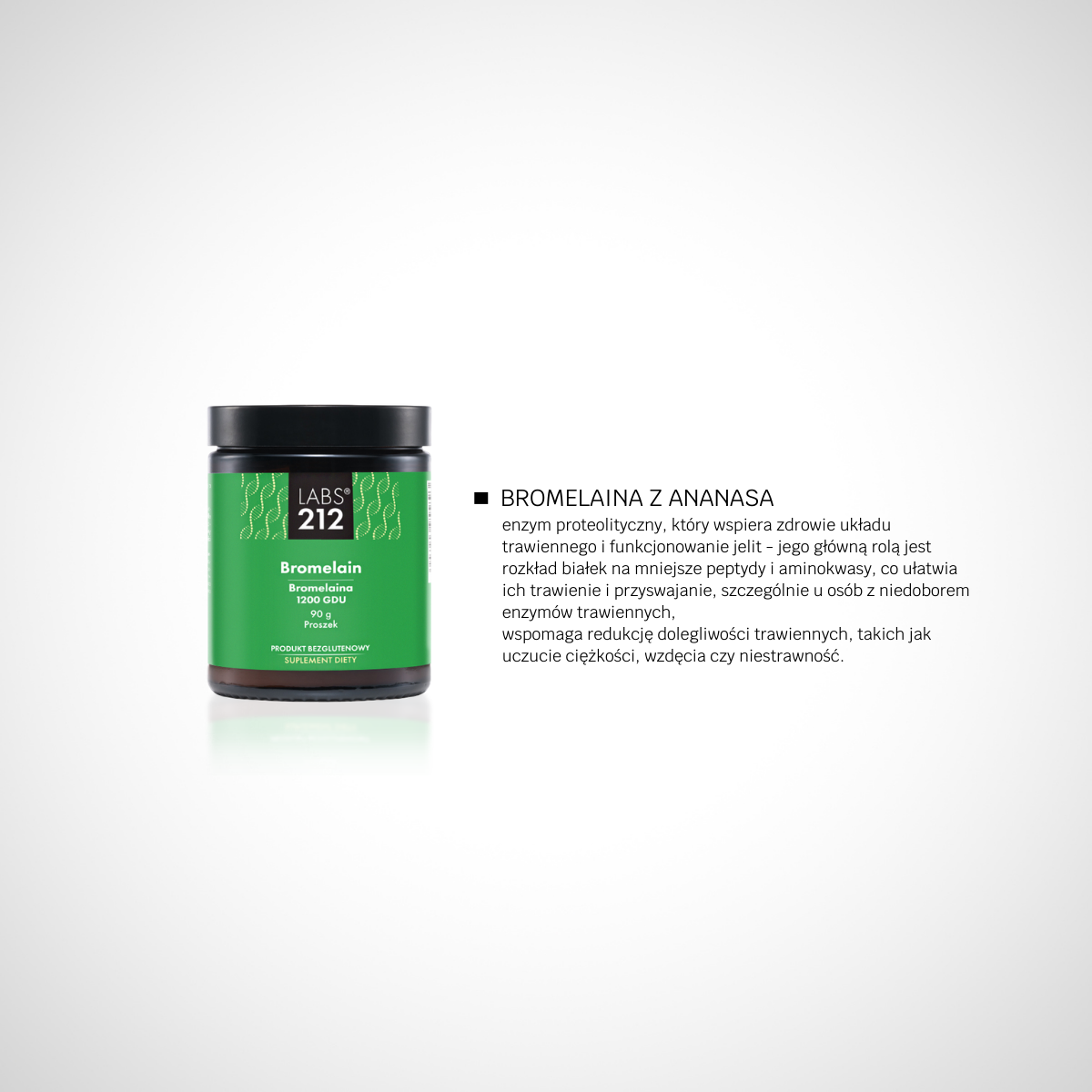



Bromelain does not replace endogenous enzymes secreted by the pancreas, but it can function as a supplementary enzyme supporting proteolysis, meaning the breakdown of proteins into smaller structures. In simpler terms, it helps the body finish the job when its own enzymes are temporarily insufficient.
In situations of reduced pancreatic activity caused by aging, metabolic stress, mucosal inflammation, or a diet rich in hard-to-digest proteins, the secretion of proteases such as trypsin, chymotrypsin, and elastase decreases. These are the key enzymes responsible for protein digestion.
Bromelain, acting independently of these pathways, can partially compensate for this reduced activity.
In practice, this means that bromelain initiates preliminary proteolysis in the stomach and the upper part of the small intestine, beginning protein digestion earlier than pancreatic enzymes would. This reduces the amount of undigested residues that move into the lower sections of the digestive tract.
As a result, the phenomena of food stagnation and delayed gastric emptying are diminished, which typically manifest as a feeling of heaviness, fullness, and post-meal discomfort. The risk of protein fermentation in the intestine is also reduced, limiting gas formation and bloating associated with incomplete digestion.
Additionally, bromelain may ease the metabolic workload of the pancreas, as fewer undigested proteins mean a reduced need for intensive pancreatic enzyme secretion. This is particularly beneficial for individuals with temporarily weakened pancreatic function. Consequently, the entire digestive system operates under more optimal enzymatic conditions, and digestion proceeds more smoothly and efficiently, translating into a tangible improvement in digestive comfort.